


The upper sections of the River Dart offer some of the best white-water kayaking in the country. It is also a great place for flat-water touring, especially on the lower reaches.
At Totnes, the river becomes tidal, flowing out into English Channel at Dartmouth. Paddlers, including canoeists, kayakers and paddle-boarders, need to be aware that safe passage on the River Dart is extremely weather and water dependent. River levels, force and volume are constantly changing, especially after heavy rain upstream which, though demanding caution, also offers exciting challenges. Paddling the river requires complete focus, scanning the fast-moving water for lines to navigate, boulders, trees and other hazards. It is pure adventure. Pure adrenaline.
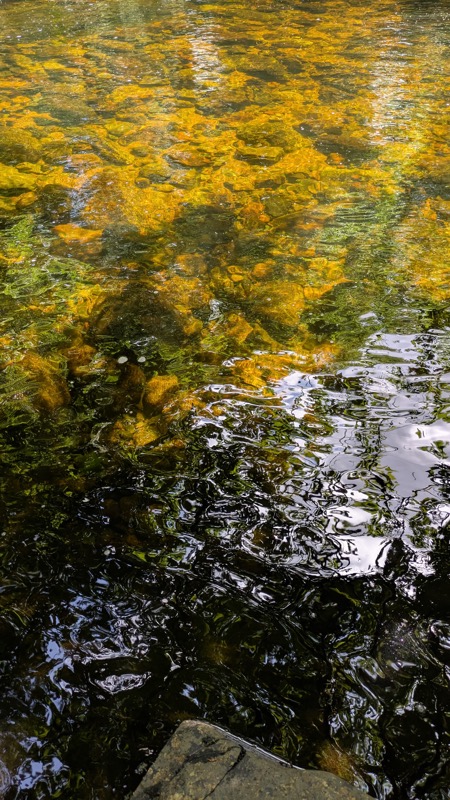
From the evocative “roar of the river”, to the golden bronze of autumnal leaves; the whiskey colour of its tannin-rich water, to the plumes of wind-blown foam, paddling on the Dart is a multi-sensory experience. Safely and respectfully done, it provides unforgettable days and a chance to connect with nature in an immersive and mindful way.
Reflections
Show the river the love it deserves
Helping protect the special qualities of the Dart Valley and avoiding damage to the environment, paddlers refrain from using the Dart’s upper reaches in times of low flow. Most especially during the salmon spawning season (from 1st October to 31st March), paddlers avoid the East and West Dart above Dartmeet. On the tidal river, below Totnes, there is no restriction on paddling.
Field Notes
Creative Collaboration between printmaker Chiara Mensa and Adrian Evans
An immersive dive
- Multi-block linocut print, 2025 Limited edition of 20
- 29,7cm x 29,7cm paper size
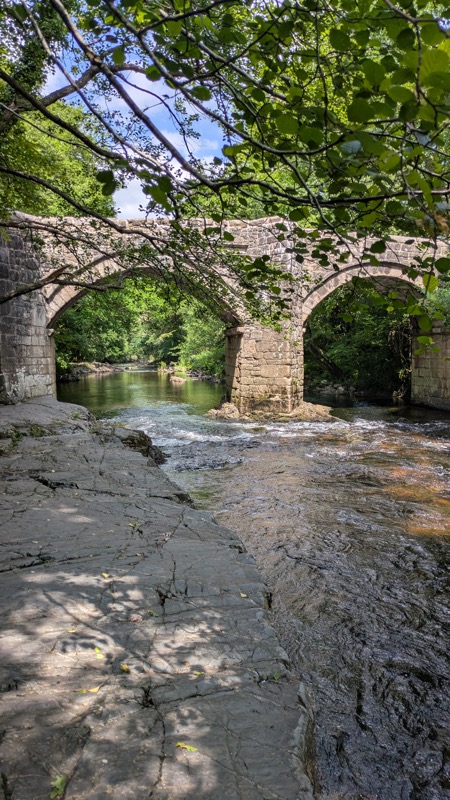
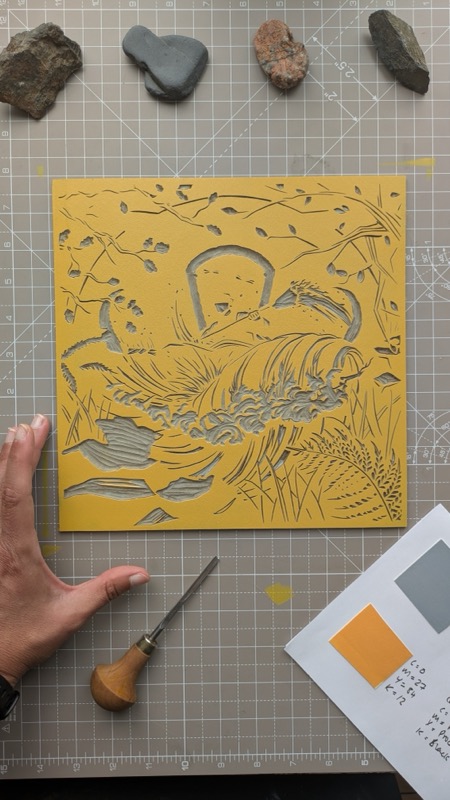
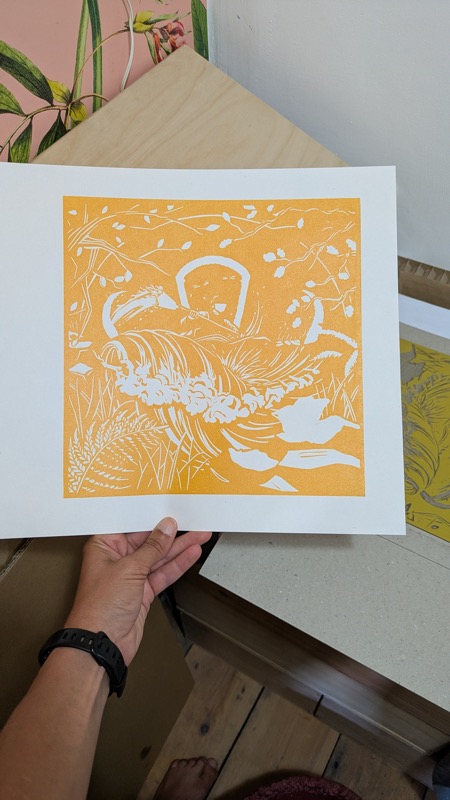
- Created in response to a commission exploring the River Dart and its many user groups, An immersive dive captures a moment of intensity and flow at Newbridge — a well-known Dartmoor spot for whitewater paddlers.
- The print celebrates the kayaker’s relationship with the river: dynamic, rhythmic, and deeply embedded in the landscape. The tunnel-like bridge frames the descent, becoming a portal between stillness and motion.
- October’s seasonal presence is woven through with native oak leaves and a solitary dipper — the river’s resident diver — perched amid the spray. Together, paddler and bird embody immersion in the elements: movement, water, and rhythm.
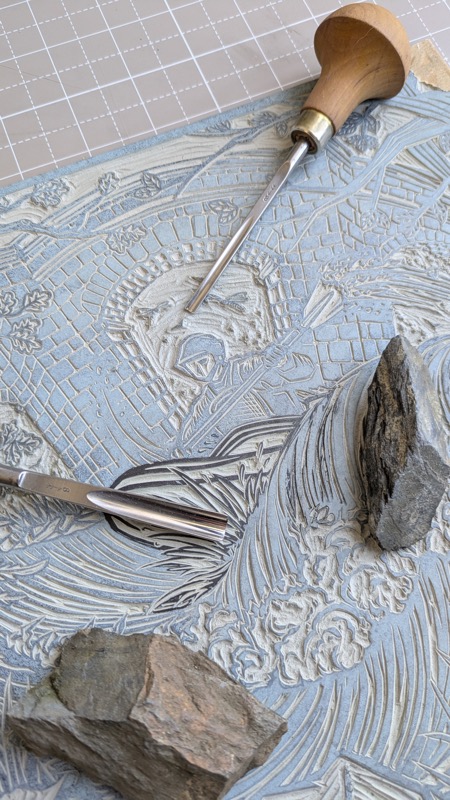
- Hand-carved and printed using linocut relief techniques, this work honours the Dart’s dual nature: its adrenaline and adventure, but also its quiet moments of observation and belonging.
Site Visit and Inspiration
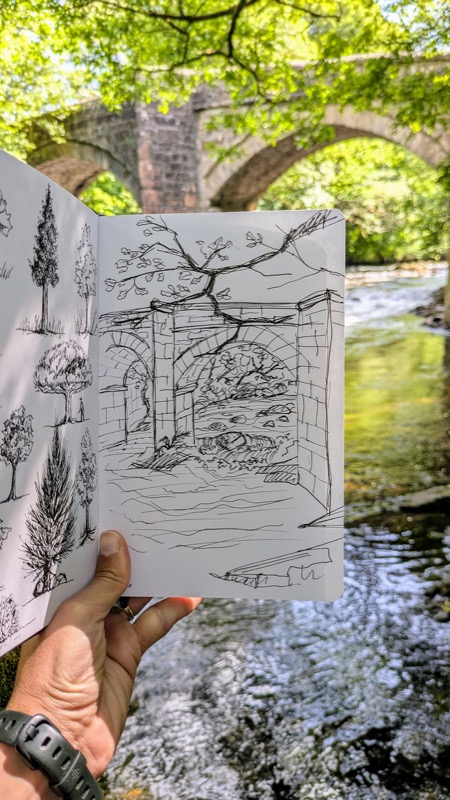
In the Studio
→ Explore the calendar in our shop
Dartmoor National Park Authority – Advice for Kayakers
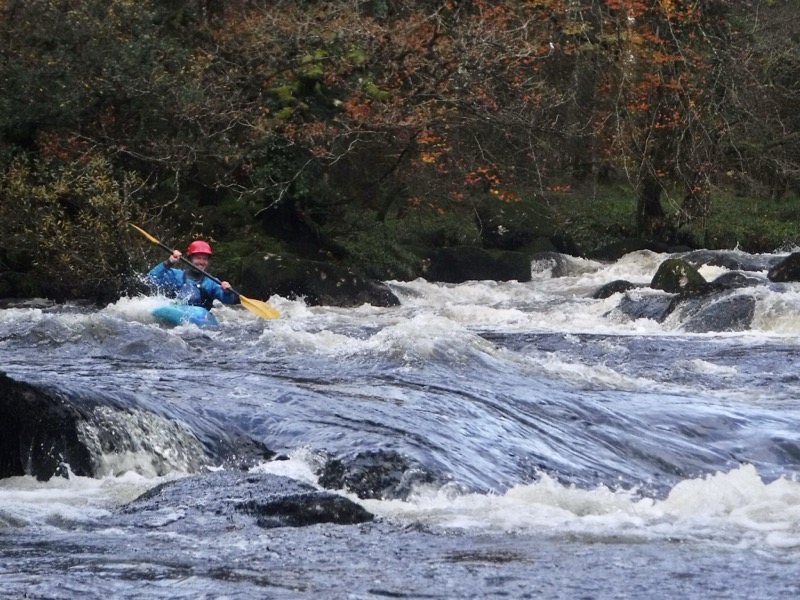
The riparian owners of the River Dart welcome canoeists from 1 October – 31 March each year. The Dart Valley is designated as a Special Area of Conservation (SAC) and Site of Special Scientific Interest (SSSI) because it is rich in wildlife. To help protect the special qualities of the Dart Valley, please do not canoe outside of these times.
There is no general permission to canoe on Dartmoor’s inland rivers but it is allowed on the River Dart during the winter below Dartmeet. Please do not canoe above Dartmeet at any time of the year.
The River Dart offers some of the best white water canoeing in the country, but please be aware that the river can rise very quickly after rain and so is only suitable for experienced canoeists.
Access Points
Within the National Park, the permitted access and egress points for the River Dart are at Dartmeet, Newbridge, Holne Weir and the Dartbridge cafe. Do not disembark at other points unless in an emergency.
Visit the Dartmoor website for more information


 No products in the basket.