

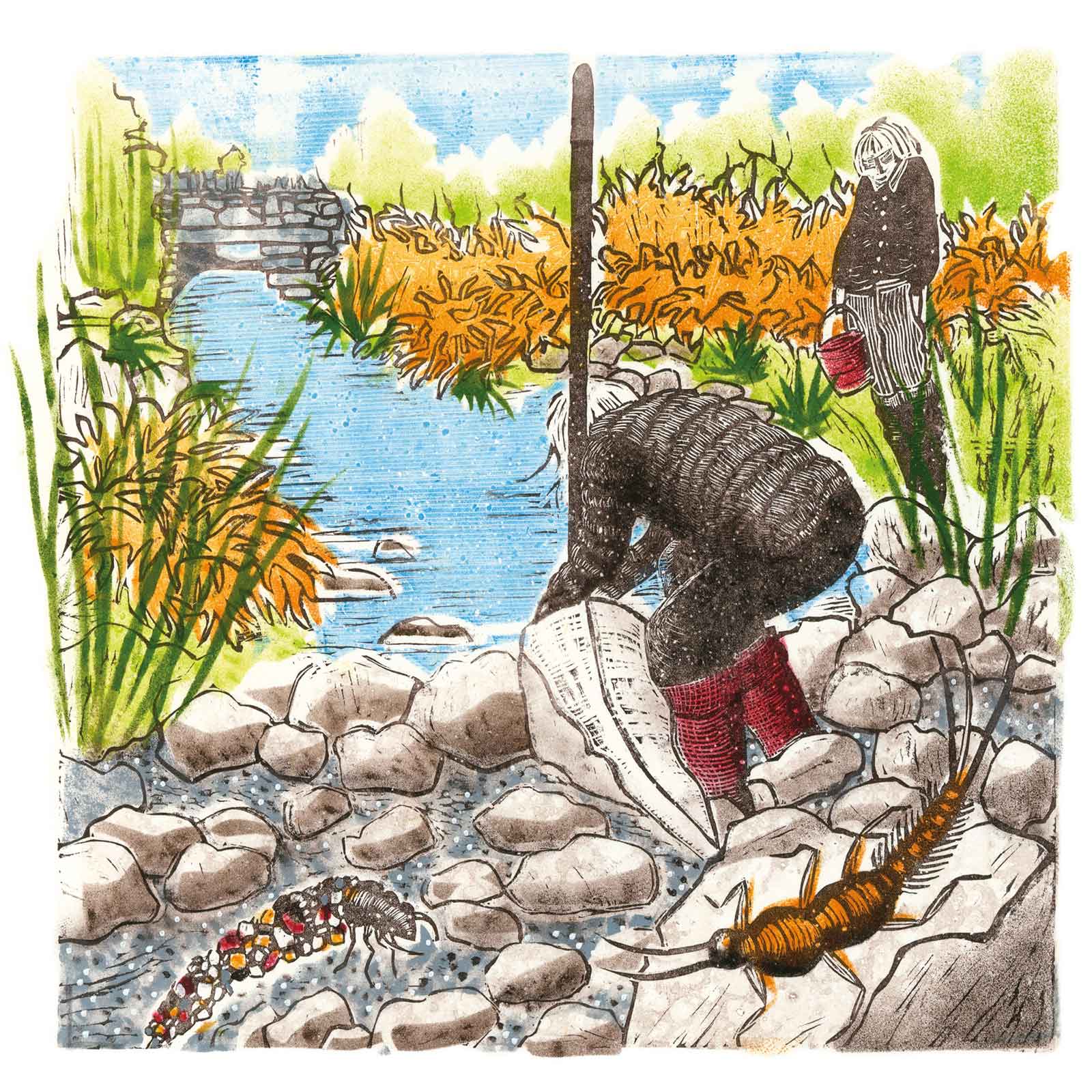
The unlikely hero of freshwater eco-systems is the humble river-fly. River-flies are invertebrates that spend most of their life-cycle in a river, stream, pond or lake. The key groups are stoneflies, caddisflies and mayflies.
Along with other freshwater invertebrates, they are at the heart of the freshwater eco-system and a vital link in the aquatic food chain. Common characteristics of limited mobility, relatively long-life cycle, presence throughout the year and specific tolerances to changes in environmental conditions, make them sensitive indicators of water quality.
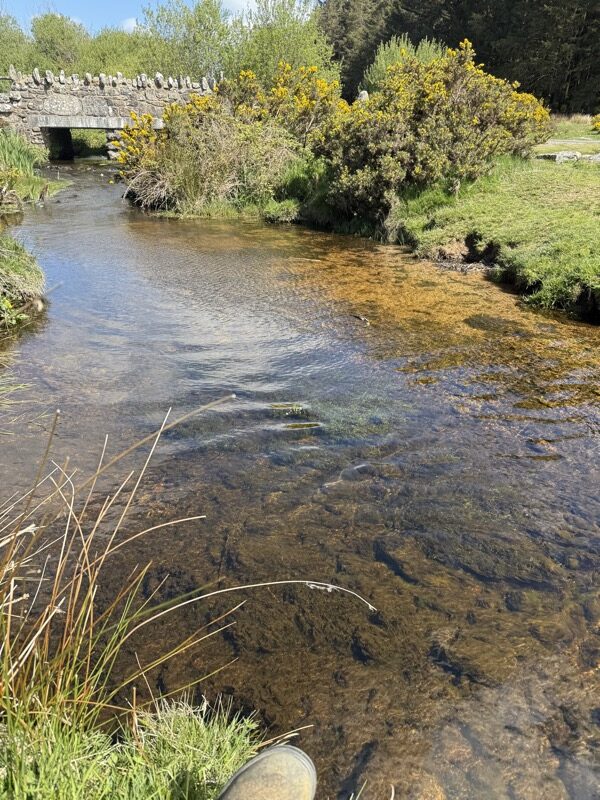
Volunteers help to assess and protect the health of the river by monitoring river-fly populations. Along the River Dart there are 15-20 sites from which samples of water are taken 3 times a year, between May and September. Using standardised monitoring techniques, Citizen Scientists can use river-fly data to detect disturbances in river water-quality.
As with many other areas of conservation, climate change is having a serious impact on river life. Intense heatwaves, coupled with low water-levels, are restricting the amount of oxygen in the water. Insect life-cycles are now starting 10-15 days earlier than before, putting the extended food-chain out of balance. Soil retention too, is being challenged by drought and flood; too little or too much water is entering the rivers. Soil and peat-land restoration projects on the upper Dart help mitigate this. Working out how to adapt to climate change is a race against time and resources.
River Reflections
…Enjoy the river but put nature first.
River-fly volunteers undertaking this vital work are keen to play a role in caring for the health of the river. They are often anglers, swimmers or other river-users.
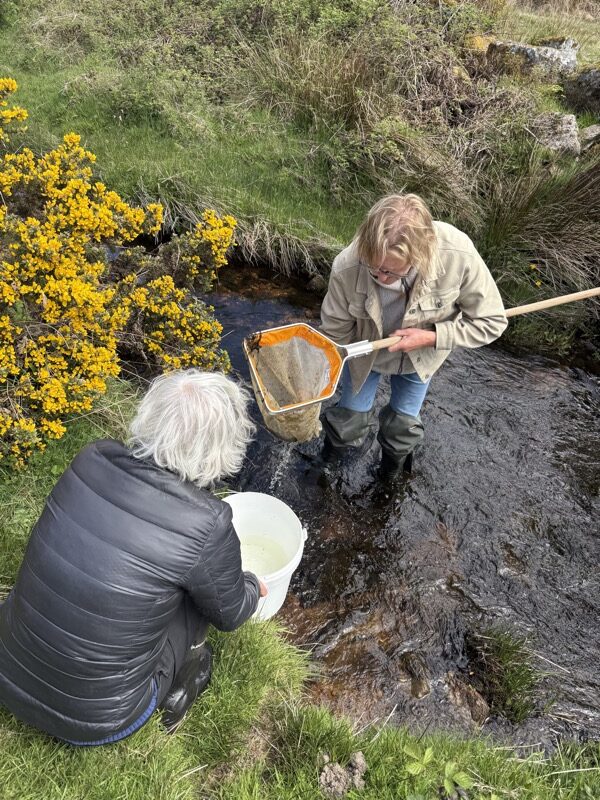
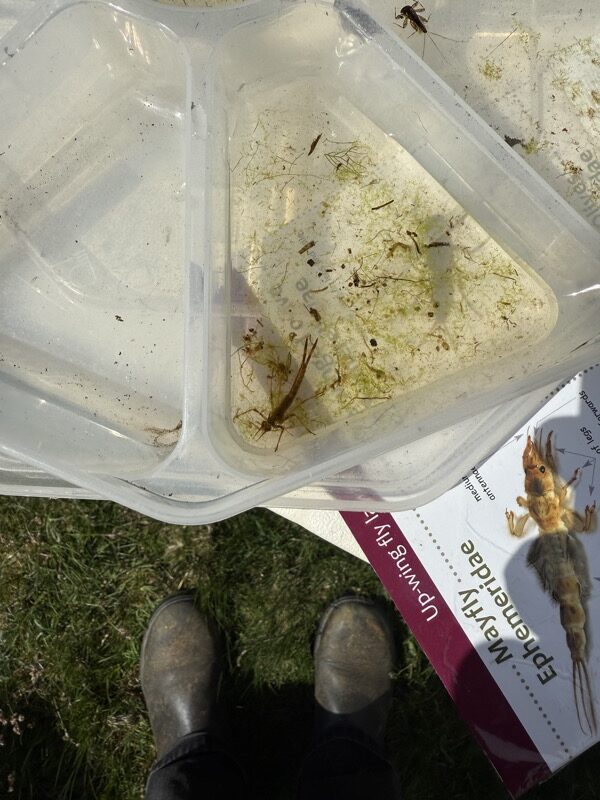
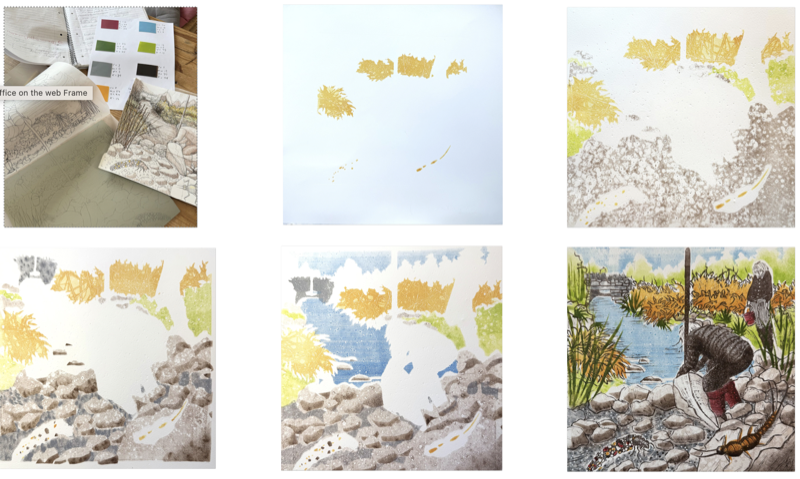
During a site visit, the volunteers gently agitate the riverbed with their waders and using a tight-meshed net downstream, collect the disturbed material. This activity is timed for 3 minutes. The contents are mixed into a bucket of river-water and later poured into a wide, shallow tray, ready for inspection. Using identification guides, volunteers spend a couple of hours identifying the water-borne larvae, before putting them in separate containers for counting later.
They also do a boulder test, which is 1 minute long and involves upturning rocks in the river to see if there are any larvae clinging to them. The amounts and apparent health of the insects is a good measure of the health of the river.
For river-fly volunteers, these endeavours provide a way of being involved with other like-minded allies of the Dart, whilst empathising with the ecosystem of the river and contributing to knowledge vital to its health.
Field Notes
Creative Collaboration between Beth Munro and River Fly volunteers Hilary Townsend and Anna Dunscombe.
Site Visit and Inspiration
In the Studio
 No products in the basket.